
Infrastructure
35,000 sq. ft. facility within the Cosmafan Foundry Cluster
Manufacturing Setup
A comprehensive, vertically integrated foundry equipped with modern machinery for every stage of the casting process.
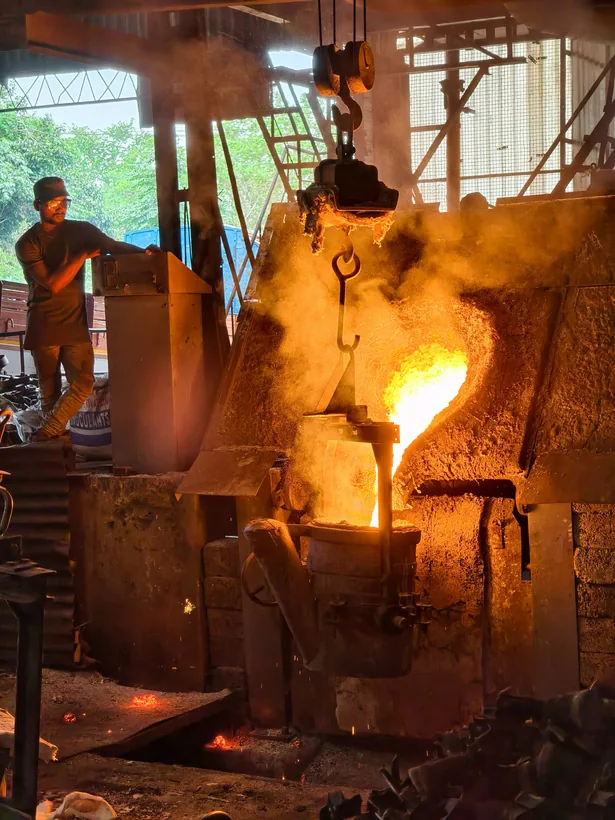
Melting
Dura-Line® Inductotherm Induction Furnace with 750 kW / 750 kg melting capacity. Dual Track high-efficiency furnace enables rapid melting of ferrous metals, ensuring consistent quality.
Moulding
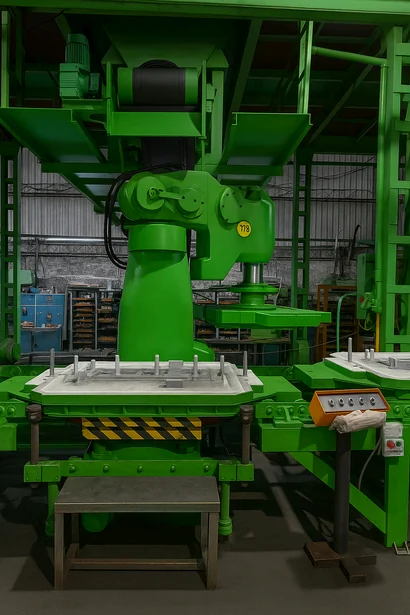
Green Sand
Our standard process, run on 2 pairs of ARPA 300 machines and 1 ARPA 1300 machine with track line (1350 × 1100 mm moulding boxes). Fast, reusable and cost-effective, covering the large majority of the castings we produce.
CO2
Used selectively where higher dimensional accuracy is needed than green sand provides — typically fine detail work or heavier sections up to 650 kg where green sand is more prone to erosion. A sodium silicate binder is hardened by passing CO2 gas through the mould, setting it chemically rather than by mechanical compaction.
- Faster mould hardening than air-set, so cycle times are shorter
- No baking or binder-breakdown fumes during pour, unlike shell or resin processes
- Tighter dimensional accuracy on the heavier end of our range
- A harder mould surface, giving a cleaner as-cast finish and less fettling
Core Shop
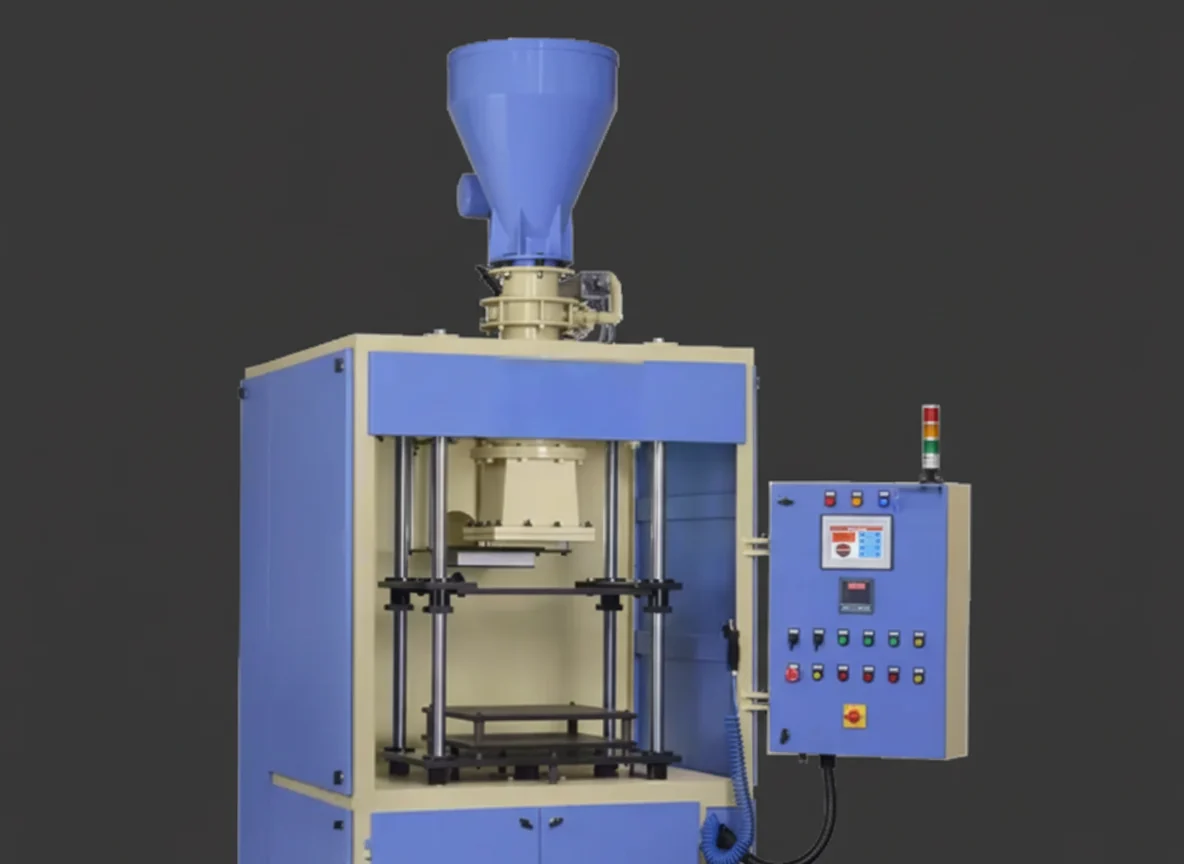
Three Semi-Automatic Cold Box Core Shooters for creating robust cores essential for intricate casting designs. Manual core making for air setting cores is also available.
Fettling
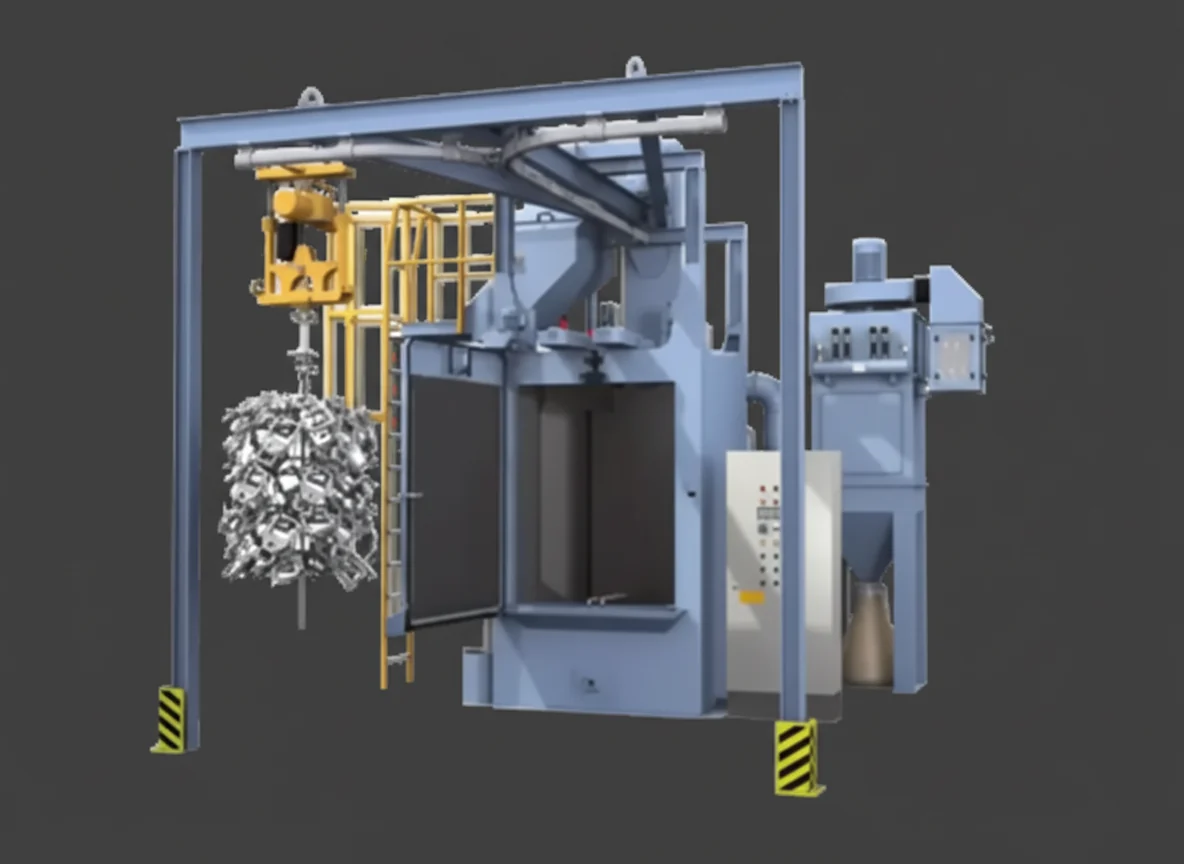
2 dedicated knockout stations for small and large boxes. Tumb Blast and Hanger-type shot blasting machines for surface cleaning. Bed grinding, swing grinder, and hand grinders for finishing.
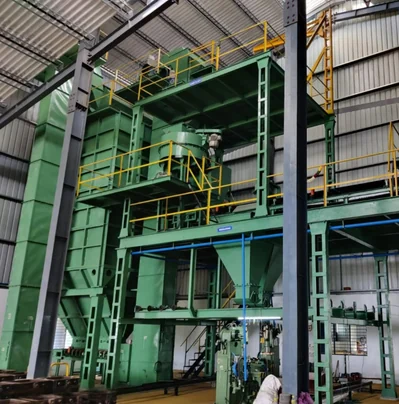
Sand Plant
State-of-the-art Sand Plant with a 15-ton per hour capacity sand muller, running round the clock to ensure the best quality reclaimed sand for all foundry needs.
From Cupola to Induction
How our melting capability has changed, and why it matters to the castings you receive.
For most of the foundry’s history melting was done on a cupola, as it was across most of the Indian grey iron industry. Around five to six years ago we moved to induction melting with the installation of a 750 kW Dura-Line Inductotherm furnace, and that change did more for casting quality than any other single investment we have made.
The reason is control. A cupola’s chemistry drifts with the coke bed and the charge, so composition has to be corrected downstream and some variation between heats is unavoidable. An induction furnace melts a known charge to a known temperature, which means carbon and silicon can be held far more tightly, sulphur pickup from coke is eliminated, and the reproducibility needed for higher SG iron grades becomes reliable rather than lucky.
In practice that shows up as tighter grade compliance batch to batch, cleaner metal with fewer inclusion defects, and the ability to hold a specification across a repeat order rather than only on a first sample. Every heat is checked on the spectrometer before pouring.
Pattern Making and Machining
Two capabilities we run through established partners rather than in-house.
Pattern Shop
Patterns and core boxes are produced through pattern shops we have worked with over many years, all within Coimbatore. Keeping tooling local matters during sampling: a pattern that needs correcting after first-off inspection can be adjusted in days rather than weeks, which shortens the path from drawing to approved first article.
Machining
Machining is handled through partner machine shops nearby, so castings can be supplied as cast or fully machined and ready to fit. Coimbatore’s density of engineering and machine tool capacity means this can be scaled to the job rather than limited by what sits inside one factory.
Send a drawing and we will advise on pattern construction, tooling cost and whether machining makes sense to include — request a quotation.
Frequently Asked Questions
Do you offer CO2 moulding?
Yes. Alongside green sand moulding on our ARPA 300 and ARPA 1300 lines, we run CO2 moulding for castings that need higher dimensional accuracy and a stronger mould, typically for finer detail work, tighter tolerances, or the heavier sections in our range where a green sand mould is more prone to erosion or distortion under the metal head.
What is the difference between green sand and CO2 moulding?
Green sand is compacted mechanically on the ARPA jolt-squeeze machines and is our standard process for most work. CO2 moulding hardens a sodium silicate sand binder chemically by passing CO2 gas through the mould, giving faster hardening than air-set, a harder mould surface, tighter dimensional accuracy and a cleaner as-cast finish with less fettling.
What melting equipment does the foundry use?
Melting is done on a 750 kW Dura-Line Inductotherm induction furnace with a 750 kg capacity, installed around five to six years ago. Before that the foundry melted on a cupola, as was standard across the Indian grey iron industry.
Why did you move from cupola to induction melting?
Control over chemistry. A cupola's composition drifts with the coke bed and charge, so it has to be corrected downstream and some variation between heats is unavoidable. An induction furnace melts a known charge to a known temperature, which lets carbon and silicon be held far more tightly, eliminates sulphur pickup from coke, and makes the reproducibility needed for higher SG iron grades reliable rather than incidental.
What moulding machines do you have?
Two ARPA jolt-squeeze moulding lines. The ARPA 300 handles smaller and more intricate work where detail and repeatability matter most, and the larger ARPA 1300 takes heavy sections up to our 650 kg maximum. Both green sand and CO2 moulding are available, with cores made on semi-automatic cold box core shooters and manual air-set cores for complex internal geometries.
Do you make patterns in-house?
Patterns and core boxes are produced through pattern shops in Coimbatore that we have worked with over many years. Keeping tooling local matters during sampling, because a pattern needing correction after first-off inspection can be adjusted in days rather than weeks. Customers are also welcome to supply their own patterns.
Can you supply machined castings?
Yes. Machining is handled through partner machine shops close to the foundry, so castings can be supplied either as cast or fully machined and ready to fit, scaled to the requirements of the job.